The soul of the works: between Wabi-Sabi and Heirloom.
To understand João Ishiguro's woodworking is to grasp two intertwined philosophies: the poetic acceptance of wood's organic imperfection, and the uncompromising pursuit of building furniture to last centuries without screws.
The beauty of the imperfect, the impermanent, and the singular.
“A Japanese philosophy that celebrates imperfections and what many consider flaws, elevating them to reveal the profound beauty of every detail.”
Each tree is singular. Two tables sharing identical dimensions and silhouette will never be the same; each harbors its own grain story, weather marks, and soul.
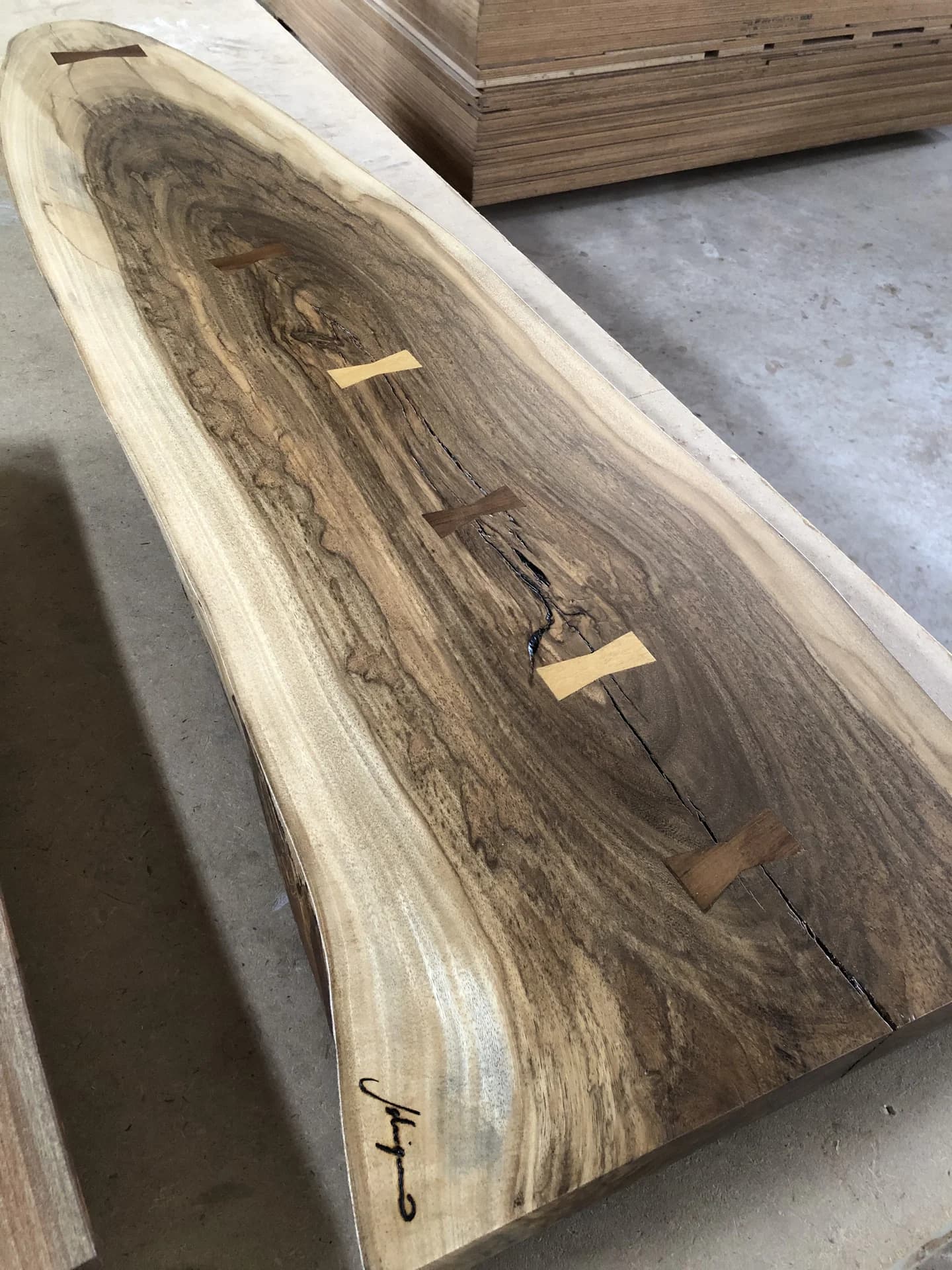
Whether a natural crack stabilized with hand-carved butterfly keys (chigiri) or a wild knot weaving an organic pattern, these elements are never patched with plastic putty or buried under synthetic varnish: they make each piece unrepeatable.
- Live Edge (Bordas Vivas): The natural contour of the tree's outer cambium is hand-burnished to preserve the forest's original silhouette.
- Stabilization Keys (Chigiri): Geometric inlays in contrasting hardwood that halt fissure expansion, turning tension into architectural art.
- Knots & Living Grain: Decades of seasonal storms, sun, and growth recorded in timber, unveiled under penetrating natural oils.
Built to span generations: a tangible legacy.
“Heirloom furniture is conceived with noble materials and ancient woodworking methods so it can be passed down from parent to child, gathering history without losing structural integrity.”
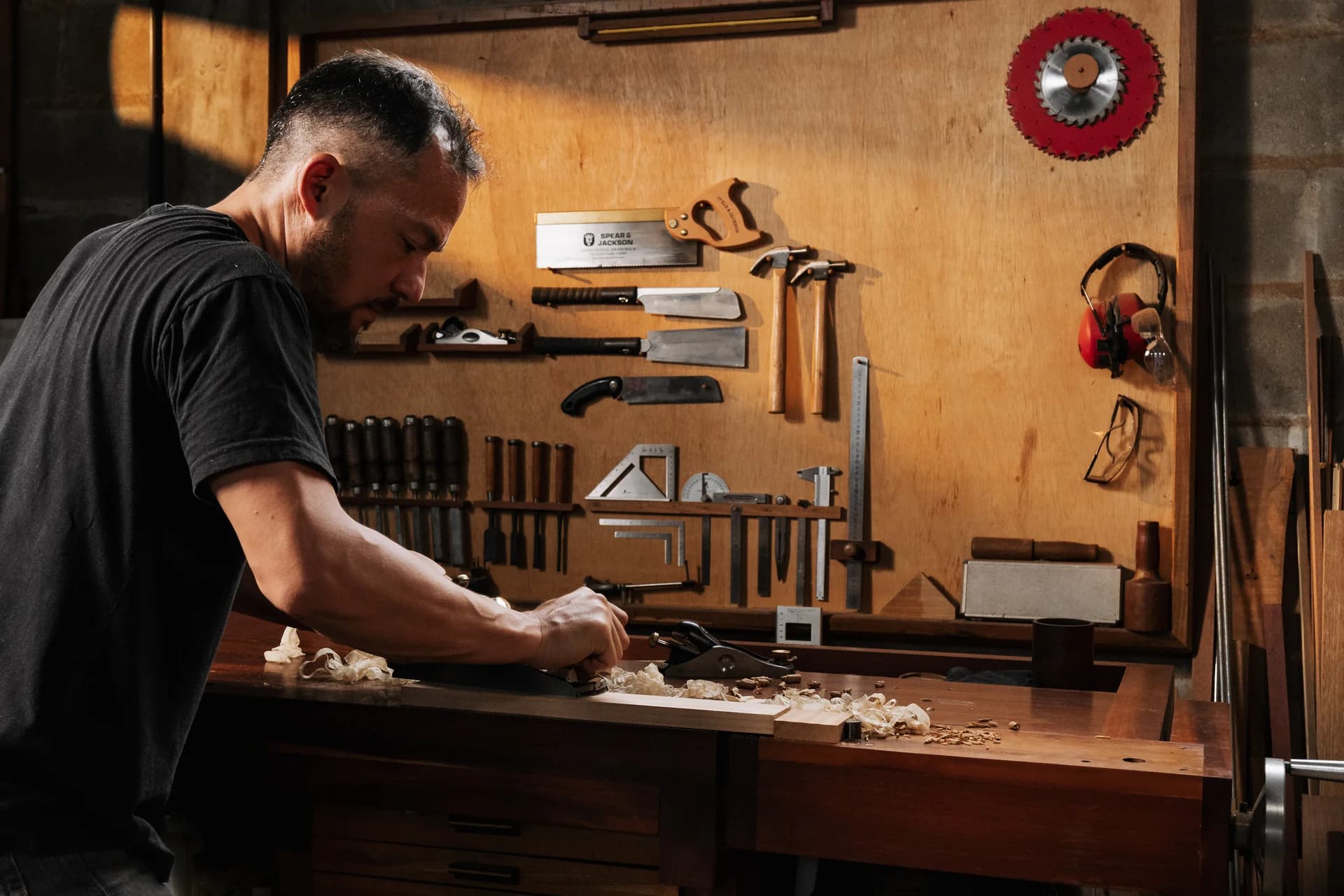
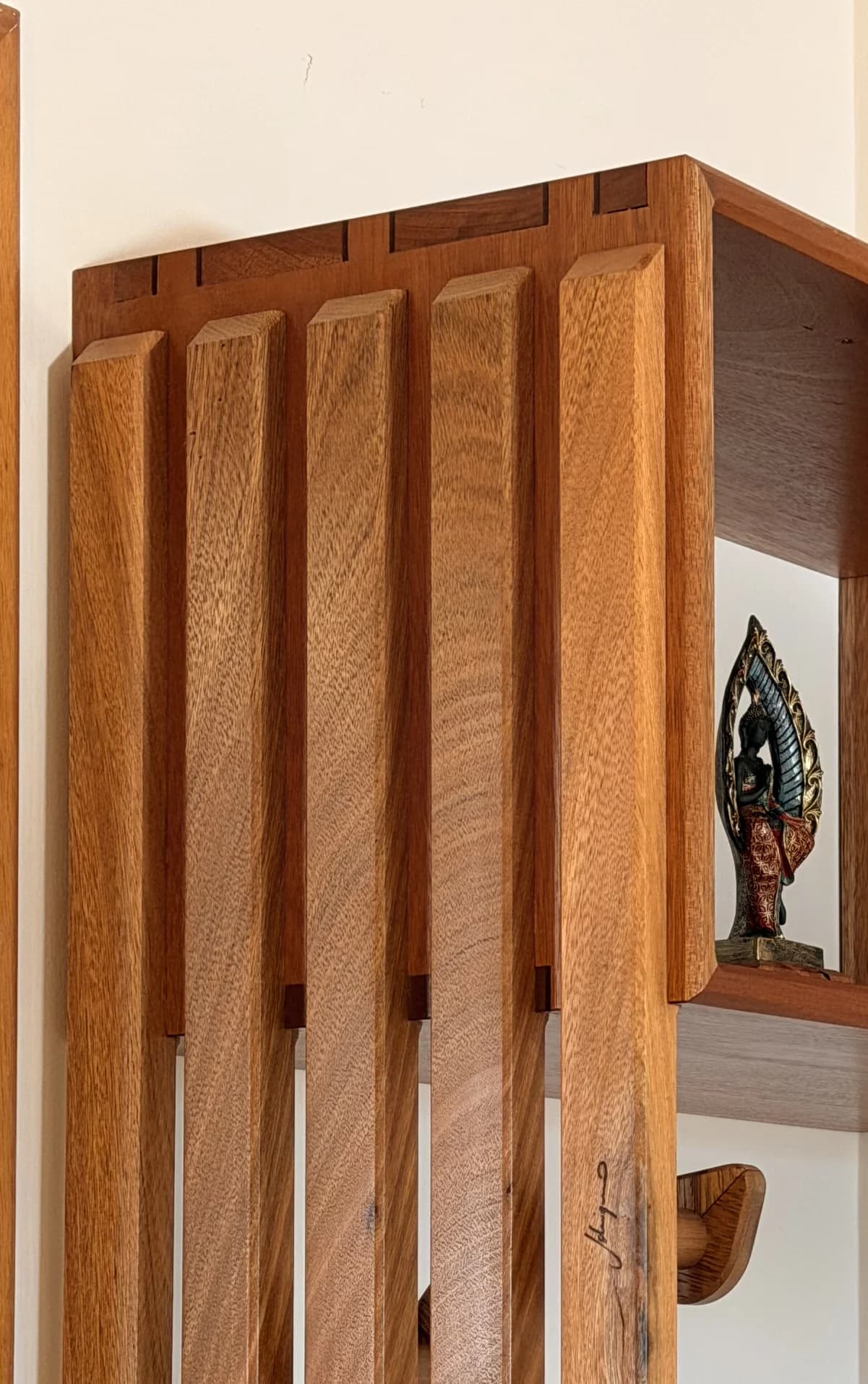
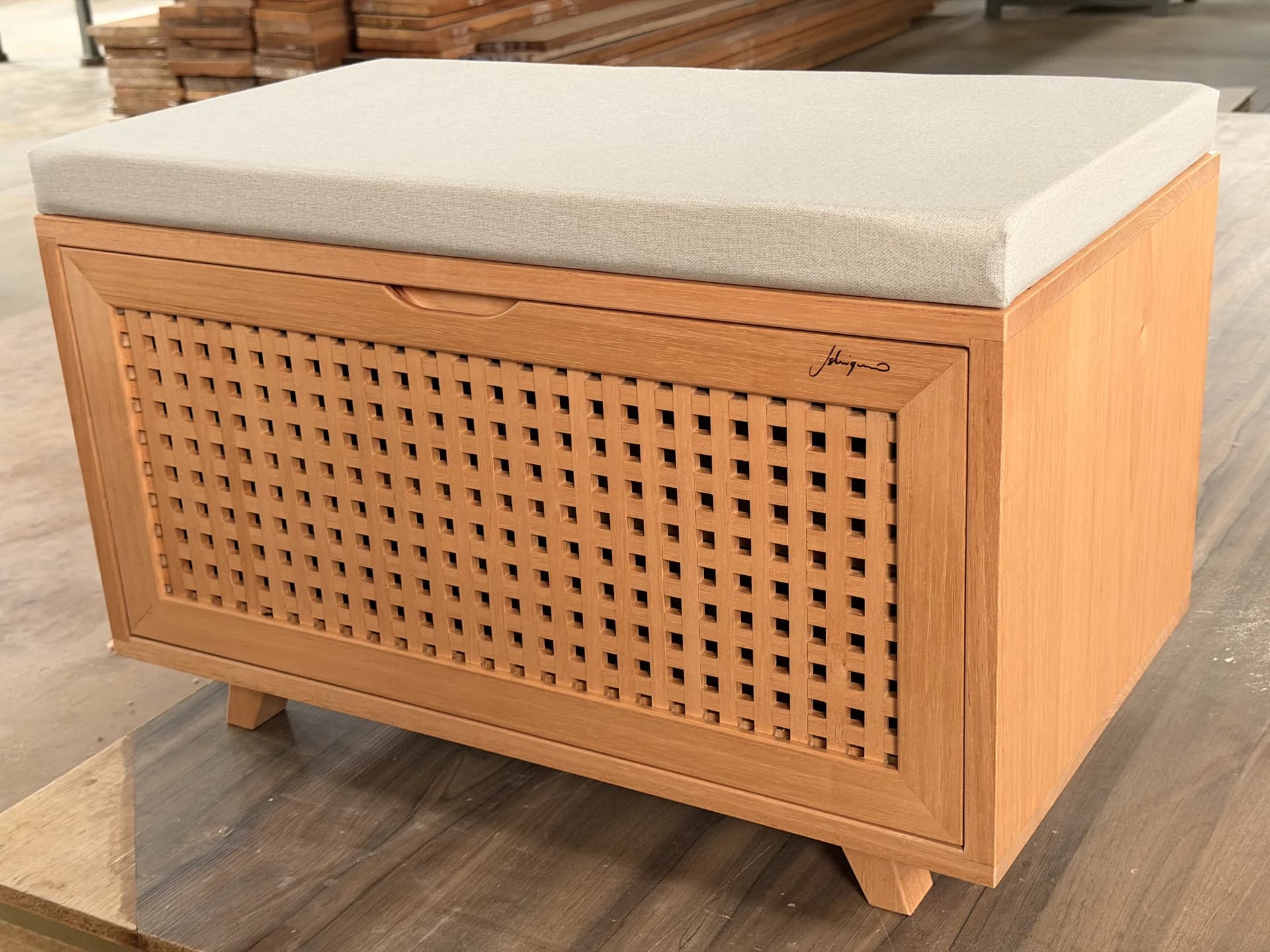
In direct defiance of contemporary disposable furniture, our atelier employs classic Japanese joinery (such as mortise and tenons, bridal joints, and half-blind dovetails) where wood locks wood naturally, eliminating reliance on screws and metal brackets that loosen, strip, and corrode over time.
An Heirloom piece never fears the passage of time: it matures with a noble patina, becoming richer and more emotionally meaningful with every decade.